• Tennis great, Ivan Lendl, quickly adopted golf as a retirement obsession. Lendl, the father of five daughters, passed that love to the girls. Except the youngest one. This one was tough, to the point of being identified as “Crash”. As a preteen youngster, Crash approached her father with the admonition that she did not want to play golf. Her sports minded father said that was fine, but she had to do something, and what would it be? Women’s hockey. No question.
Okay, said the Dad, there is a women’s college hockey game on tonight and we’ll stay up and
watch it. Hunkered in front of the TV, Father and young Crash, watched the game begin. Almost immediately a play near the boards caused Crash to pose this question of her Father and the game itself: “Why didn’t that girl body check her opponent when she had her right there at the board?”
Her father explained that in women’s college hockey there is no legal body checking. He was then surprised as this obviously disappointed youngster rose and walked out of the room withthe comment “…forget it then, I’ll just go ahead and play golf.” (From THE NEW YORKER). P.S. I believe the fact was included that while all the Lendl daughters were fine golfers, Crash
won the local club championship at 11 years old. Wonder where she got that.
TENNIS EXCUSE LIST
- The balls were too fluffy.
- The balls were too heavy
(light, yellow, white, old, new). - It was too hot.
- It was too cold.
- I have a cold.
- I have a headache.
- It’s too windy.
- It’s too humid.
- I can’t play indoors.
- I can’t play outdoors.
- I have a blister.
- i have tennis elbow.
- The sun was in my eyes.
- I can’t play when the sun’s not
shinning. - I can’t play at night (under lights).
- I can’t play early in the morning.
- I was thirsty.
- I can’t play on an empty stomach.
- I’d just eaten.
- My racquet’s dead.
- My racquet has a broken string.
- Slipping grip.
- I have old shoes.
- I have new shoes.
- I can’t play on clay.
- I can’t play on hard surface.
- He’s a pusher.
- He cheats.
- He accused me of cheating.
- My partner double faults.
- My partner talks too much.
- Partner thinks I’m cute.
- Teammates are too intense.
- Teammates are too loose.
- Too many drunks on the team.
- Not enough drunks on the team.
- My opponent is an airhead.
- I can beat that guy any day
(but today). - I didn’t think we’d play today.
- I’m tired from yesterday.
- This tournament is run like
a circus. - I was worried about my
girlfriend. - I can’t play when someone’s
watching. - I can’t play when no one is
watching. - I was watching instead of
playing. - Sweat got in my eyes.
- I can’t believe he called that
ball out. - The linesman blew it.
- Tennis is a groggy game.
- I think the court’s too short.
- Snuff nerves!
HARVEY PENICK’S BOOK
About the time I started trying golf
Harvey Penick (with Bud Shrake) wrote
Harvey Penick’s Little Red Book (Simon and
Schuster, 1992). Penick, the longtime golf
coach at the University of Texas and golf
professional in Austin, describes the book’s
origin in the first part of the book:
“An old pro told me that originality does
not consist of saying what has never been
said before; it consists of saying what you
have to say that you know to be the truth.
“More than sixty years ago, I began
writing notes and observations in what I
came to call my Little Red Book. Until
recently I had never let anyone read my Little
Red Book except my son, Tinsley.
“My intention was to pass my Little
Red Book on to Tinsley, who is the head
professional at the Austin Country Club.
“With the knowledge in this little book to use as a reference, it would be
easier for Tinsley to make a good living teaching golf no matter what happens
when I am gone.
“There is only one copy of the red Scribbletex notebook that I wrote in. I kept
it locked in my briefcase. Most of my club members and players who came
to me for help heard about my Little Red Book as it slowly grew into what
is a slender volume
considering that all the
important truths I have
learned about golf are
written in its pages.
“What made my
Little Red Book special
was not that what was
written in it had never
been said before. It was
that what it says about
playing golf has stood
the test of time.
“I prefer to teach with images, parables and metaphors that plant in the
mind these seeds of shotmaking. These, too, went into the notebook— if they
proved successful.
“Maybe it was wrong to hoard the knowledge I had accumulated. Maybe
I had been granted these eighty-seven years of life and this wonderful career
in order that I should pass on to everyone what I had learned. This gift had not
been given to me to keep secret.
“A writer, Bud Shrake, who lived in the hills near the club, came to visit me
under the trees on this particular morning. “That morning under the trees we
opened my Little Red Book.”
Wikipedia states the book became the number-one selling golf book of
all time and calls Coach Penick perhaps the best golf coach of the
mental game. Among his star pupils, Mr. Penick lists Ben Crenshaw
(Masters Tournament champion) and Tom Kite (in his day the top money
winner for professional golfers and a U.S. Open champion).
The book is essentially 80 golf lessons, clearly stated in one to two pages.
A few are longer. What struck me immediately was the common-sense
approach, yielding succinct lessons. Lessons Coach Penick describes as
proven help. I doubt if anyone could make me much of a golfer. But more
than golf was the realization that this man knows how to teach and coach.
And he was the same kind of professional gentleman as my mentor,
Mr. Jim Leighton. Coach Leighton was Harvey-in-tennis. Perhaps not as
well-known, but he had the same kind of effective teaching techniques.
And, as I read Coach Penick’s book, I was stunned by the similarities with
Coach Leighton and the career experiences I had gathered over 50 years
of teaching and coaching.
Coach Leighton finished his career at Wake Forest University. The tennis
stadium is named for him. His book, Inside Tennis: Techniques of Winning is
a stellar tennis work.
My own writing is limited. I tried to compile a guide to coaching college
tennis in the early ’80s but abandoned the effort until 2007. Play Is Where
Life Is was about one-third tennis.
Like Coach Penick, I thought that was it. However, Coach Penick
published three more books. I like all of them, especially the title of his
second: If You Read This Book You Are My Pupil, And If You Play Golf You Are
My Friend. My son Dan says I am “on the other side of the digital divide” and
introduced me to blogging. The Little Red Book of golf may be the
first golf blog. I doubt if Harvey realized what was to come.
My blog (www.tomparham.wordpress.com) was a way to continue
writing—and writing about tennis especially.
I do not consider myself in a league with either Coach Penick or Coach
Leighton. I do have an admiration and appreciation for both. And a
realization that they both went about conveying proven valuable lessons
in a language and style that is quite similar.
Bob Dylan sang, “you’ve got to get up close to the teacher if you want to
learn anything.” (“Workingman’s Blues #2”). The Little Green Book of Tennis is
my attempt to pay tribute to these two great teachers/coaches/
gentlemen and their techniques.
Like Coach Penick I have tried diligently to select the lessons that
are valuable and true in tennis. Most have a connection to my many hours
spent with Coach Leighton.
TOURNAMENT TIME
Born male, in 1940 in North Carolina with the “love of sports” gene, son of a a Baptist minister who graduated from “old Wake Forest” , I was a Demon Deacon.
“WE” beat Everett Case and the dominant Wolfpack twice by one point (71-70 and 51-50), with my Dad and I listening to Ray Reeves on the Atwater Kent radio. No TV yet. Dickie Hemric, Lowell “Lefty”Davis, Coach Murray Greason, with Bones as assistant.
Bad news, good news from Raleigh’s News and Disturber: 1. BAD–The N&O has forgotten that WFU is part of the “big four”. Coverage, current and historical, neglects Winston Salem as part of the state. 2. GOOD: Larry Silverberg, a professor of Mechanical and Aerospace Engineering was published today (March 3, 2018) with an article entitled MATH REVEALS THE PERFECT FREE THROW.
Malcolm Gladwell concluded Michael Jordan missed baseball “clunkering” and thus couldn’t hit at the major league level.* Having watched the “ball bounce” a lot of times, I was pleased with Professor Silverberg’s conclusions. Some I wrote about on this blog in 2011. Check blog 13 on GOLF PUTTING AND FREE SHOW SHOOTING.https://littlegreenbookoftennis.com/?s=free+throws
What a week in Atlantic Coast Conference. Duke vs Carolina tonight after FSU over Duke, Miami over Carolina, and Georgia Tech over State in three of the most exciting games of the year. The “new ACC guys” upped the ante this week.
Want to know who is gonna win the final four.? The ones who make the free throws at the end. Clunk.
My eleven year old grandson plays his season finale today for the BOULDER BUFFALOES. His dad is a sub coach. The regular coach has three young kids. One, almost always wears his spiderman suit. Sometimes to bed, Coach says. In a community center with six courts he runs the “side game”. These are games of little brothers and sisters with their own rules and games. This kid RUNS the side game. Our last trip to Boulder included the eleven year old brother’s b-ball game. Lennox is our other grandson. He’d just turned two, but was sick. When our family, en mass, walked in the gym, Spiderman asked abruptly, “Where’s Lennox?” My Son commented, “Lennox can hang. Spiderman likes him as backup.” Made me proud.
*CLUNKERING”: Gladwell say Michael missed those years baseball people put in watching the nuances of the game, or clunkering. (Spin on the ball, pitcher’s mannerisms and “tells”, etc.). “Shop time, baby!”—Coach Mickey Brown.
SEBORRHEIC DERMATITIS
Beach dwellers are, or should be, aware of sun and skin damage. My bride, having worked for a dermatologist, and being a natural mother monkey, watches my elder status closely. Ear and nose bristles are common kudzu-like growers and thus, targets. “Stand up straight!” “Put your shirt on”. “Your toenails need attention”.
The look on her face this summer, however, was different. Voice alarmed as she spoke to shirtless me this summer. “Come here a minute. How long has that black mole been on your chest?”
Oh, that’s just a flake of a Klondike chocolate bar I ate yesterday. It’ll come off in the ocean. C’mon.
Am I wrong or isn’t getting harder to eat a Klondike bar without getting a flake or two on you?
A WHOLE NEW WORLD
The link below is to an article in ATLANTIC MAGAZINE, by Taylor Branch.
The comment following is from that article.
https://www.theatlantic.com/magazine/archive/2011/10/the-shame-of-college-sports/308643/
This sweeping shift left the Olympic reputation intact, and perhaps improved. Only hardened romantics mourned the amateur code. “Hey, come on,” said Anne Audain, a track-and-field star who once held the world record for the 5,000 meters. “It’s like losing your virginity. You’re a little misty for awhile, but then you realize, Wow, there’s a whole new world out there!”
GO FIGURE
There were 14 internationals drafted by NBA teams. NC State’s Cat Barber wasn’t drafted. NC State recruited 3 international men’s basketball players (pending eligibility). Which Americans got bumped?
FOOTBALL AT THE CROSSROADS
Football at the Crossroads
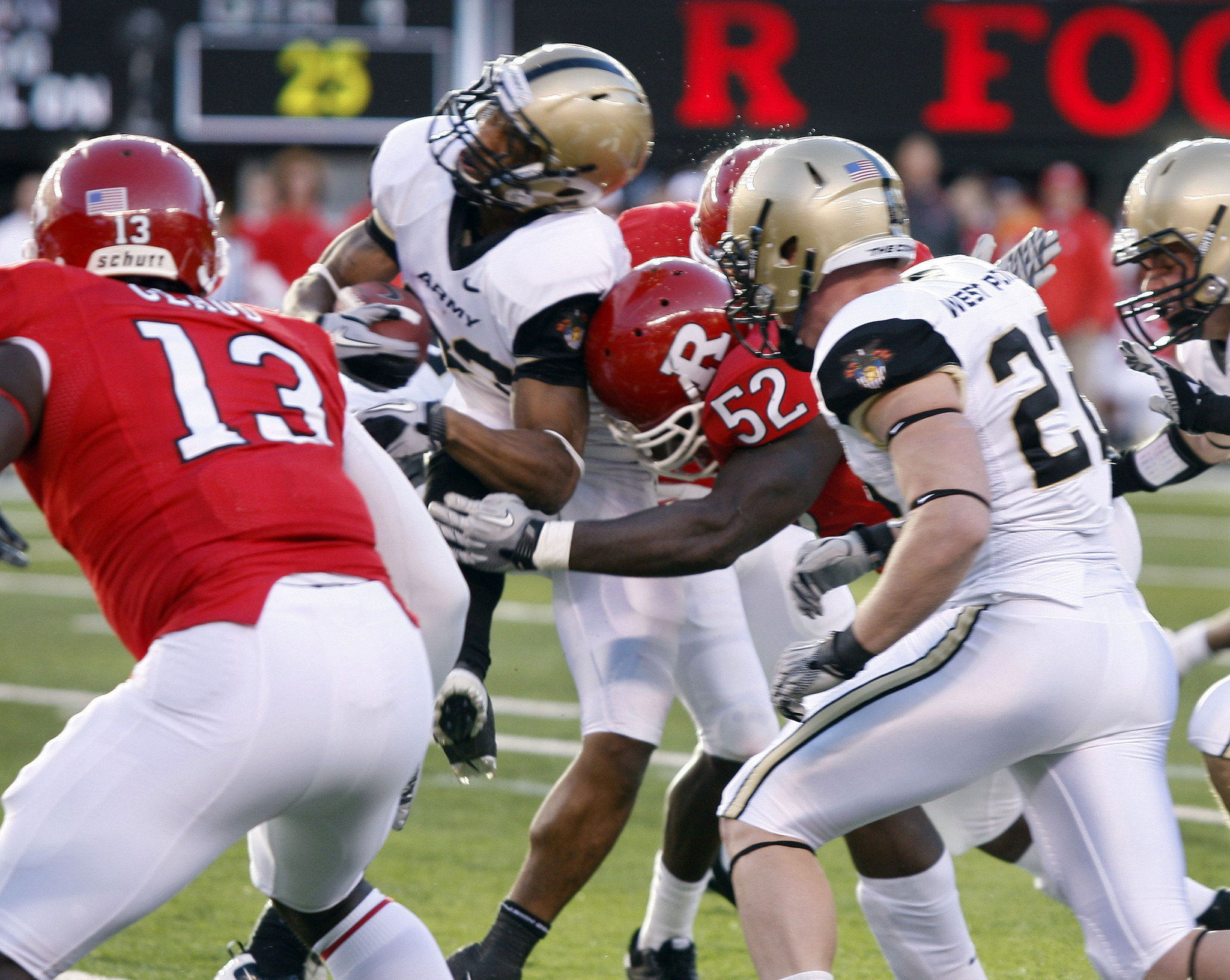
In the late 1960’s an orthopedic doctor, concerned about the health of his football playing sons, wrote his observations. Dr. O. Charles Olsen’s book, “The Prevention of Football Injuries,” made note of the adverse and pronounced effects of “spearing” or head gear to chest tackling. While this technique was effective and caught on quickly, the number of deaths and severe injuries rose as a rapid level never before witnessed before in football.
Dr. Olsen concluded that energy equaled one half of the mass times velocity squared. (e=1/2m x v squared). The bigger, stronger, faster players were creating a force that couldn’t withstand head gear to head gear, or head gear to knee contact.
The consolidation of schools eliminated many of the smaller players. African American footballers were added to the talent pool, along with weight programs, better diets, and better coaching, and in many instances steroids. Tremendous contact ensued. And, while efforts have been made to control this violent hitting, football is at a crossroads.
The question of the long term effects of head contacts have forced the questions of (1) are we dealing with concussions properly,(2) are we legally liable if we turn our backs on the problem (3) are the linemen more vulnerable than we thought and (4) can you “take the head out of football?” and on and on. These questions have been around. Perhaps no one has done more research than UNC Chapel Hill. Dr. Carl Blyth and Dr. Fred Mueller have done yeoman’s work in an attempt to protect our young players. This effort was begun a long time ago. Dr. Mueller still pursues the data at the National Center for Catastrophic Sport Injury Research.
Pro football features a real ballet each game day. The receivers and defensive backs are making plays that are at a new level of brilliance . Truly a work of physical, human art. At the same time Olsen’s theory of force is hardly better exemplified than when a receiver crosses the field and is hit by a defensive back. And, while a defensive back may be penalized for “head hunting”, he knows if he jars the ball loose, and or intimidates the receiver, his game rating goes up. While this risks tragic injury possibilities (his own included) is his job security a factor that urges him on?
The crossroads football faces include some other variables. The more violent the hitting, the more the injury. Yet the more violent the hitting the more market appeal the game experiences. Are we getting to the “gladiator” level of violence? And while college and professional football are in the crosshairs of violence, perhaps high school footballers are even more vulnerable. And here is why: The weak and small and slow are eliminated at the college level. But in many high schools, small players may face tremendous opponents. These guys hitting the “canon fodder” can create catastrophe.
“You can’t take the head out of football” might become “you must take the head out of football.” How to do this is the crossroads question. I fear the 2011 season will make this even more apparent. “I would let my son play football, but I would not encourage him to play football.” James Michener, Sports In America 1976.
QUICK THINKING COACH
While stopping for fuel, a fellow coach made a trip to the Men’s room. Door is locked. Urgency caused a test of the Women’s facility. Aha! No one around, door unlocked,”…I’ll be in and out unnoticed!”
Relieved, next is a peep out the door. Coast is clear!
Then a startled woman appears. With a quick exit, the veteran coach lifts one finger and explains: “Transsexual”
HOW DID I DO?
Looking back at the blogs did my suspicions hold up?
1. Football is still dangerous, and getting to be more so. Also–it’s no secret. Everybody knows (see CONCUSSION).
2. In pro tennis both men and women have learned the virtues of the drop-shot. One–it tires opponents quickly.
Secondly, it has a subtle psychological effect that discourages opponents. Years back I suggested Djokavic and Murray
were the most diligent in pursuing it’s perfection. Didn’t the 2016 French Open prove that. American juniors: Take
heed. Develop your drop-shot. And your DEFENSE AGAINST THE DROP SHOT. That starts with conditioning and footwork/posture.
3. College tennis again. There is a direct correlation between college scholarships awarded to Americans, and future American
quality professional players.
4. The Iraq war. History unfolds and reveals the truth. Unnecessary war mongering is evil.

